

If you’ve ever cut a ski day short because your feet felt cold, cramped, or painfully sore, you’re not alone. Most skiers (especially beginners) don’t realize just how much the right (or wrong) pair of boots affects comfort, control, and overall fun on the mountain.
Let's break down the three essential things every skier should know before buying ski boots!
1. Ski Boot Sizing Is NOT Shoe Sizing
This is the first and biggest surprise for most skiers.
Ski boots use Mondo Point sizing, which is simply the length of your foot measured in centimeters. Example: If your foot is 26.5 cm long, then your ski boot size is 26.5
But here's the catch: Mondo sizing does NOT match regular shoe sizes, and online ski boot size charts are notoriously unreliable.
Most people who size themselves using a shoe-size conversion end up in boots way too big, leading to sloppy control and painful pressure points.
A proper ski boot fit should feel snug, especially when brand new. That’s because the boot liner will pack out (compress and loosen) over time. In the shop, it should feel like a firm handshake: secure heel, toes with a little wiggle room, and no uncomfortable gaps.
If it feels like your favorite sneakers on day one? It’s probably too big.
Bottom line: Get your foot measured by a pro boot fitter. It’s worth every penny.
2. Boot Volume Matters Just as Much as Boot Size
Two ski boots can have the exact same length, yet feel completely different. Why? Because of boot volume.
Volume refers to the shape of your foot, not just how long it is. This includes:
- Foot width
- Instep height
- Ankle and heel shape
Modern ski boots often come in multiple volume options:
- LV (Low Volume): narrow, low-profile feet
- MV (Medium Volume): average foot shape
- HV (High Volume): wider feet or higher insteps
Choosing the right volume ensures the boot matches your natural anatomy, which means:
- Better control
- Better comfort
- Better circulation (helps make for warmer feet to get more runs in!)
A professional boot fitter will examine all the nuances of your foot shape, not just length and width, to find the perfect match.
3. What’s The Right Flex Index for You? Soft vs Stiff
That number stamped on the side of every ski boot (70, 90, 110, 130) is the flex rating. It tells you how stiff the boot is when you flex forward.
Here’s the quick breakdown:
60-80 Flex:
Soft, forgiving, comfortable.
Great for beginners or casual skiers.
90-110 Flex:
More supportive, more responsive.
Ideal for intermediate skiers who want better control.
120-130+ Flex:
Very stiff, precise, powerful.
Made for aggressive or advanced skiers.
But there are three important things to keep in mind:
1. Flex isn't standardized.
A 100 flex in one brand can feel like a 90 in another. You need to try a few.
2. Your body size matters.
Heavier, taller, or stronger skiers generally need a stiffer flex even if their skill level is moderate.
3. Higher flex = more premium features.
Upgrading your flex level often unlocks valuable boot technologies, such as:
- Heat-moldable liners
- Custom shell molding
- Better buckles and power straps
- Adjustable lean and flex
- Cuff alignment for knock-kneed or bow-legged stances
- BOA systems
- New-generation rear-entry designs
Entry-level boots typically skip these features to keep the cost down.
Think of it like clothing:
Beginner boots = off-the-rack fit
Advanced boots = custom-tailored suit
Why You Should Always Work With a Boot Fitter
Boot fitting is part science, part craft. A skilled fitter will take a long list of measurements, ask questions about your skiing style, and evaluate the unique shape and biomechanics of your feet.
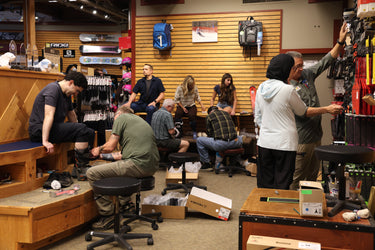
At MTNside Ski & Ride, both male and female boot fitters offer custom consultations to help every skier find the perfect pair, whether you're grabbing your first set of boots or replacing a worn-out pair after years of use.
A comfortable boot is the key to life when skiing and boarding. Call us to schedule your boot fitting today!
Written by Gia Hill


